Sciences
IB Chemistry Syllabus & Topics
In short: The full IB Chemistry syllabus: the core topics and the optional themes, broken down, with what each one asks of you in the final exams.
The following content outlines the syllabus for IB Chemistry, a subject within the International Baccalaureate (IB) Diploma Programme.
This course is designed for students who are curious about the nature of matter and chemical processes, with a strong emphasis on critical thinking and scientific inquiry. It promotes concept-based learning, encouraging students to make connections between theoretical knowledge and real-world applications.
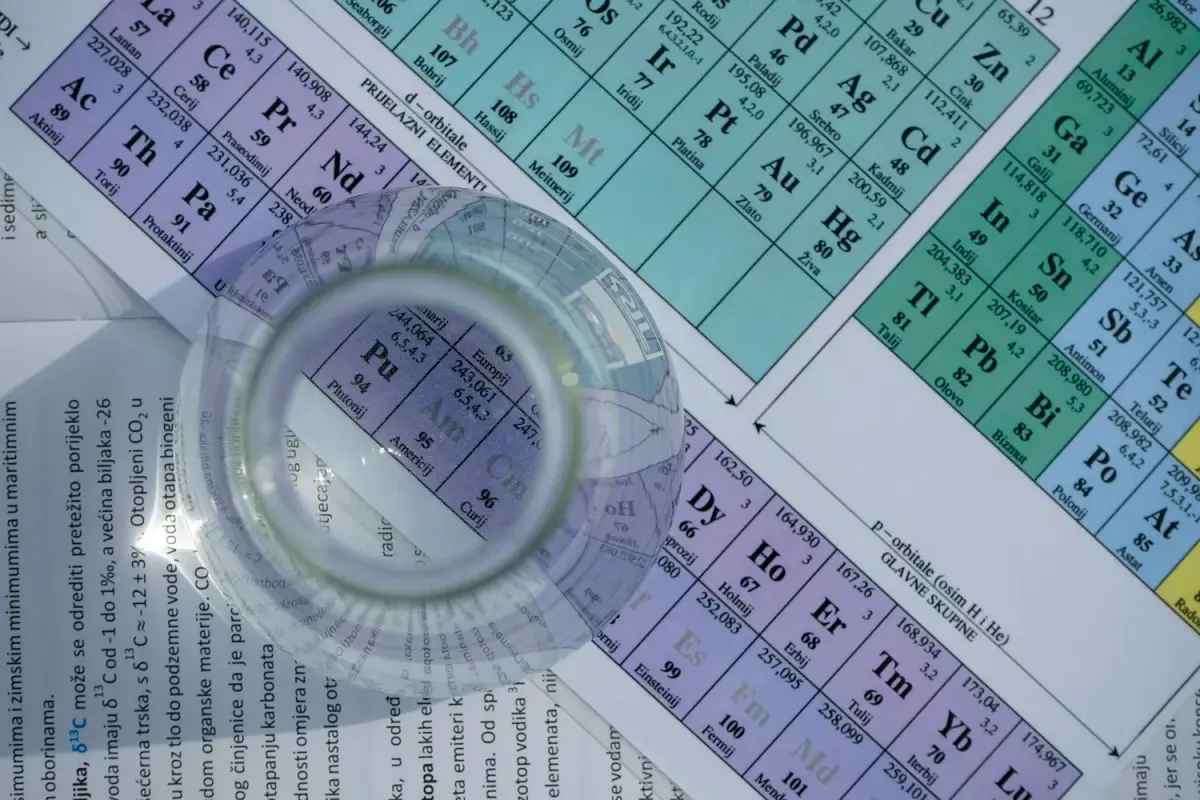
The IB Chemistry syllabus builds on the spirit of inquiry at the heart of the course. It’s designed to guide students through the key concepts, skills, and methods that define modern chemistry, encouraging them to see how scientific understanding develops and connects across different areas.
Throughout the syllabus, students move from exploring the foundations of atomic structure and bonding to tackling the complexities of thermodynamics, kinetics, and organic chemistry. Along the way, they investigate how these ideas apply to real-world contexts - from environmental sustainability to medical and industrial innovation.
Ultimately, the IB Chemistry syllabus is more than a list of topics - it’s a framework for thinking scientifically, connecting ideas, and discovering how chemistry shapes our world.
If you're struggling with any topics in the Chemistry syllabus, feel free to reach - our team of IB experts has extensive experience helping students from all around the world.
Book Trial LessonIB Chemistry Syllabus Content
IB Chemistry Syllabus
| Syllabus component | Recommended teaching hours | SL | HL |
|---|---|---|---|
| Syllabus content | |||
| Structure 1. Models of the particulate nature of matter | 17 | 21 | |
| Structure 1.1 - Introduction to the particulate nature of matter | 17 | 21 | |
| Structure 1.2 - The nuclear atom | 17 | 21 | |
| Structure 1.3 - Electron configurations | 17 | 21 | |
| Structure 1.4 - Counting particles by mass: The mole | 17 | 21 | |
| Structure 1.5 - Ideal gases | 17 | 21 | |
| Structure 2. Models of bonding and structure | 20 | 30 | |
| Structure 2.1 - The ionic model | 20 | 30 | |
| Structure 2.2 - The covalent model | 20 | 30 | |
| Structure 2.3 - The metallic model | 20 | 30 | |
| Structure 2.4 - From models to materials | 20 | 30 | |
| Structure 3. Classification of matter | 16 | 31 | |
| Structure 3.1 - The periodic table: Classification of elements | 16 | 31 | |
| Structure 3.2 - Functional groups: Classification of organic compounds | 16 | 31 | |
| Reactivity 1. What drives chemical reactions? | 12 | 22 | |
| Reactivity 1.1 - Measuring enthalpy change | 12 | 22 | |
| Reactivity 1.2 - Energy cycles in reactions | 12 | 22 | |
| Reactivity 1.3 - Energy from fuels | 12 | 22 | |
| Reactivity 1.4 - Entropy and spontaneity (Additional higher level) | 12 | 22 | |
| Reactivity 2. How much, how fast and how far? | 21 | 31 | |
| Reactivity 2.1 - How much? The amount of chemical change | 21 | 31 | |
| Reactivity 2.2 - How fast? The rate of chemical change | 21 | 31 | |
| Reactivity 2.3 - How far? The extent of chemical change | 21 | 31 | |
| Reactivity 3. What are the mechanisms of chemical change? | 24 | 45 | |
| Reactivity 3.1 - Proton transfer reactions | 24 | 45 | |
| Reactivity 3.2 - Electron transfer reactions | 24 | 45 | |
| Reactivity 3.3 - Electron sharing reactions | 24 | 45 | |
| Reactivity 3.4 - Electron-pair sharing reactions | 24 | 45 | |
| Experimental programme | 40 | 60 | |
| Practical work | 20 | 40 | |
| Collaborative sciences project | 10 | 10 | |
| Scientific investigation | 10 | 10 | |
Need help mastering a part of the syllabus? Whether you're aiming to boost your grades or prepare for final IB exams, our team of experienced IB experts is here to help you.
Get Started